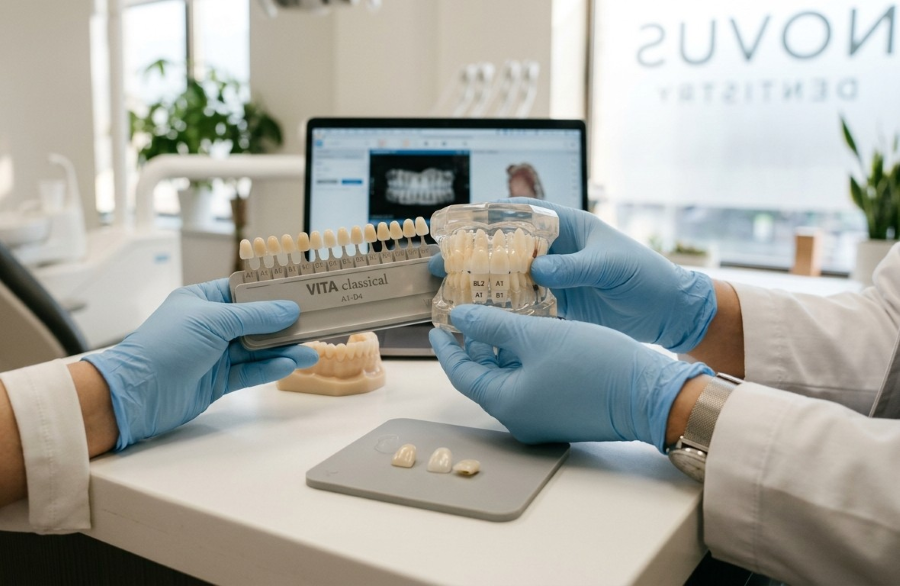
If you have cracked, broken, or missing teeth, you’ve probably felt the impact firsthand — not just on how you eat and speak, but on your confidence. So much of a first impression is tied to a healthy smile, which is why finding a fix that restores your teeth to their most natural look and feel matters. Dental implants are designed to do exactly that.
Why Replacing Missing Teeth Matters
Your teeth do far more than let you chew and speak — they also support the structure of your mouth and jaw. When a tooth is lost and not replaced, the surrounding jawbone gradually begins to shrink, a process called bone resorption. Over time, this can lead to bite problems, shifting and misalignment of the remaining teeth, loss of function, and even further tooth loss. Replacing a missing tooth promptly helps preserve both your bone and your bite.
“Patients with missing or severely broken-down teeth often think they’re facing a lifetime of dentures,” says Dr. Jose Olavo Queiroz. “That’s absolutely not the case. In the right situations, we often recommend dental implants for severe tooth damage, because they tend to provide a stronger, longer-lasting result that restores full mouth function with a look and feel close to natural.”
What Are Dental Implants and How Do They Work?
A dental implant is a small, biocompatible titanium post that your dentist places in the jawbone to act as an artificial tooth root. Over a few months, the bone naturally fuses to the post in a process called osseointegration, creating a stable foundation. A custom-made crown is then attached on top, blending in seamlessly with your natural teeth.
The process usually unfolds over a few stages. It begins with a consultation and imaging so your dentist can assess your jawbone and plan the placement. The implant post is then placed during a minor surgical procedure, followed by a healing period during which the bone integrates with the post. Finally, your custom crown is fitted. Because the implant replaces the root as well as the visible tooth, it also helps stimulate the jawbone and slow the bone loss that normally follows tooth loss.
What Can Dental Implants Replace?
One of the advantages of implants is their versatility. A single implant topped with a crown can replace one missing tooth without affecting the healthy teeth around it. Several implants can support a fixed bridge to replace multiple teeth in a row. And for patients missing most or all of their teeth, implants can anchor an implant-supported denture — a far more stable and comfortable option than a traditional removable denture that relies on suction or adhesive.
Are You a Candidate for Dental Implants?
Good candidates for dental implants generally have healthy gums and enough jawbone to support the post, along with reasonably good overall health. Certain factors — such as smoking or poorly controlled diabetes — can affect how well an implant heals, so your dentist will review your medical history as part of planning. If some bone has already been lost, that doesn’t necessarily rule out implants: a bone graft can often rebuild the area first. The only way to know for certain is a thorough examination, which is why an assessment is always the starting point.
Common Questions and Concerns About Dental Implants
Even with today’s advances in dental technology, it’s completely normal to feel some anxiety about a procedure like this. A little information usually goes a long way, and our team is always happy to talk you through what to expect. In reality, side effects tend to be minimal and short-lived — immediately after placement, some patients notice slight swelling, minor bleeding, tenderness, or bruising, which typically settle within a few days. Many people actually find the recovery easier than a tooth extraction.
Another common question is about long-term maintenance. The good news is that implants can’t develop cavities and never need a root canal. That said, the gums and bone around an implant still need to stay healthy, so daily brushing and flossing and regular dental checkups remain essential to protect your investment.
How Long Do Dental Implants Last?
With proper care, dental implants are one of the most durable tooth-replacement options available, and for many patients they can last a lifetime. The key is treating them like natural teeth: brush and floss every day, and keep up with routine visits so your dental team can monitor the implant and the surrounding tissues. For trustworthy general information on tooth replacement and oral health, the Canadian Dental Association is a helpful Canadian resource.
What About Cost and Coverage?
In Canada, dental implants are typically a larger investment than other tooth-replacement options, and they’re often only partially covered — or not covered — by dental insurance, depending on your plan. Because the total depends on factors like the number of implants and whether any preliminary work (such as a bone graft) is needed, the most accurate next step is a consultation where you can review your options, costs, and any available payment arrangements.
Dental Implants in North York
The real question is whether a little short-term discomfort is worth strong, natural-feeling teeth that can last for decades — and for many of our patients, the answer is a clear yes. If you still have questions, don’t be shy about asking; that’s exactly what we’re here for. Learn more about our dental implant services, or talk with our North York dental team about whether implants are right for you.
Your oral health matters to us, and we’re committed to helping you build healthy habits that last a lifetime. Visit us at Novus Dentistry or call (416) 488-7454 to speak with our team — we’d love to help restore your smile.